
Back to Learn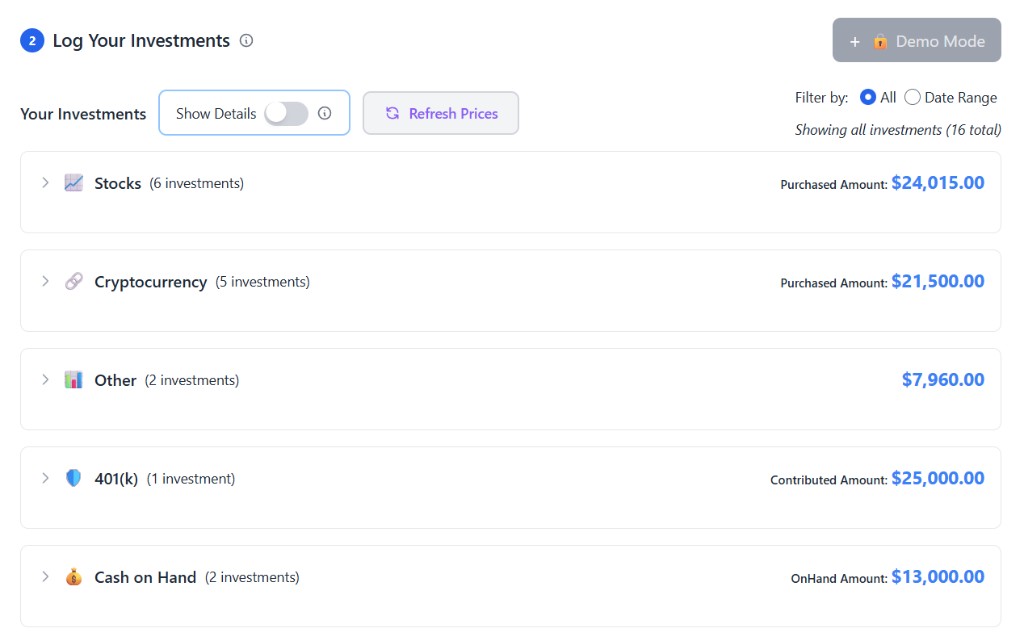
Log Investments
Part of Financial Routines
Quick Summary
Logging investments helps you track how your assets change over time.
When you record each purchase or contribution, you build a clear picture of your portfolio.
Example: Logging an investment
Investment logs typically include type (stocks, cryptocurrency, 401(k), etc.), name or symbol, shares, and prices. The example below shows a typical portfolio overview grouped by investment type.
What information you log
When tracking investments—whether in a spreadsheet, app, or journal—these fields are commonly used:
| Field | Description |
|---|---|
| Type | Stocks, Cryptocurrency, 401(k), Cash on Hand, Other |
| Name/Symbol | Ticker (e.g., AAPL) or investment name |
| Purchase Date | When you bought or contributed |
| Shares | Number of shares or units |
| Purchase Price | Price per share at purchase |
| Current Price | Latest market price per unit |
| Current Value | Shares × current price |
Example investment record
| Field | Example |
|---|---|
| Type | Stocks |
| Name/Symbol | AAPL |
| Purchase Date | 2025-01-15 |
| Shares | 10 |
| Purchase Price | $185.00 |
| Current Price | $192.50 |
| Current Value | $1,925.00 |
Investment tracking flow
Why this matters
Tracking investments over time builds financial visibility.
You can see how your portfolio grows, compare performance across types, and make better decisions.